

About the project
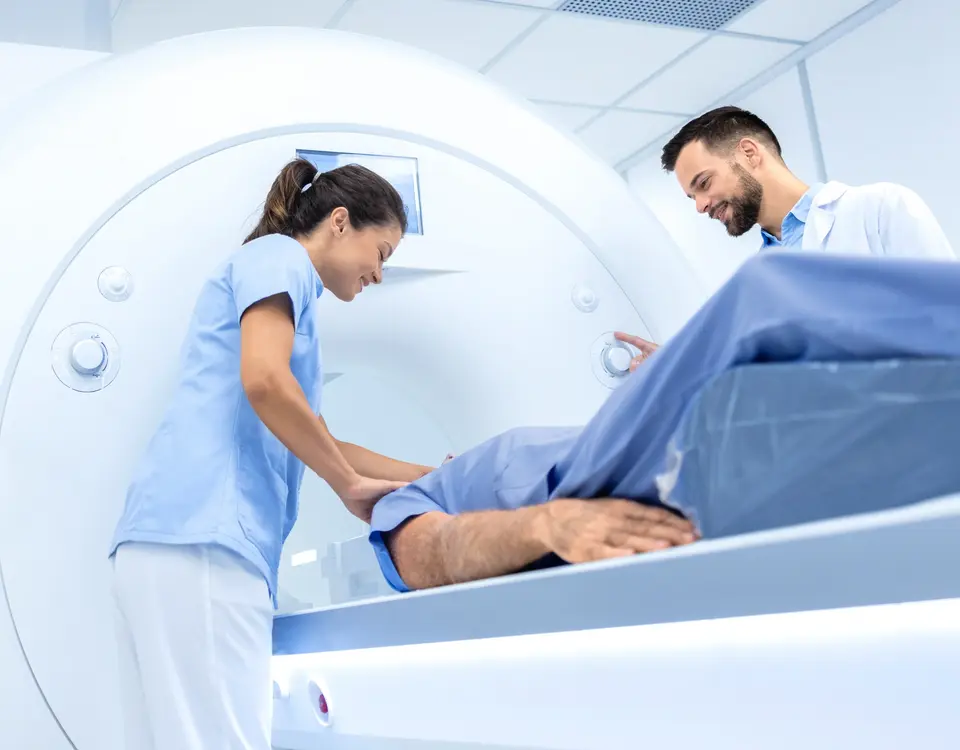
Hepatocellular carcinoma (HCC) is the most common form of liver cancer. Many cases are not detected until they have reached an advanced stage. At that point, complex treatments are often required, whilst a cure becomes more difficult to achieve. People at increased risk of liver cancer are currently screened every six months as a rule. This involves an ultrasound scan of the liver and a blood test for the tumour marker alpha-fetoprotein (AFP). These tests are widely available and relatively inexpensive. However, small or early-stage tumours can sometimes be overlooked. Magnetic resonance imagin (MRI) can detect liver tumours – particularly small lesions – more accurately. However, it is more complex, more expensive and not equally available everywhere.
The RACOON MARDER research project is therefore investigating how people at particularly high risk of liver cancer can be identified at an early stage. The aim is to potentially offer these patients more intensive and targeted early detection using MRI. This would enable more liver tumours to be detected at an early stage, at a time when curative treatment may still be possible.
Key points at a glance
RACOON MARDER aims to help improve the assessment of an individual’s risk of developing hepatocellular carcinoma (HCC), the most common form of liver cancer. To this end, various types of information are collated: medical data, comorbidities and information from MRI scans. This data will be used to identify characteristics – known as biomarkers – that may indicate a particularly high risk of developing HCC. Differences between various population groups will also be taken into account. On this basis, the researchers in the RACOON MARDER project are developing statistical and AI-supported models to better assess individual risk of the disease. In the long term, this should enable more personalised early detection: people at particularly high risk could be screened more specifically and frequently using MRI. Consequently, MRI scans could usefully complement – or, in some cases, partially replace – the ultrasound scans currently used for the early detection of liver cancer.Furthermore, the project is creating an extensive image database. Provided there is sufficient data and appropriate funding, this could also be used in future for research into other diseases and to identify further risk factors.
For RACOON MARDER, data from a total of around 800 patients from several medical centres are being collated. The study examines both imaging data from the time of diagnosis of hepatocellular carcinoma (HCC) and earlier examinations carried out between six months and five years prior to diagnosis. This information is supplemented by clinical data and the results of further medical examinations. At each individual site, suitable patients and the associated imaging data are first identified. The location of the HCC is then documented within the imaging data. In addition, relevant clinical information and examination results are recorded. The data is then transferred in pseudonymised form to the central research platform RACOON-CENTRAL. The aim is for each participating site to contribute around 25 suitable cases to the project. Before the data is used for scientific analysis, it is carefully reviewed and processed by the lead project sites. This step is intended to ensure that the data is as complete, comparable and of high quality as possible. This creates a comprehensive, site-wide data collection that forms the basis for further research into risk factors and ways of detecting liver cancer at an earlier stage.