
Governance
Responsive governance forms the basis for coordinating the NUM Study Network, which operates nationwide. The governance bodies are responsible for setting the strategic direction and providing operational support for our mission to strengthen clinical research in Germany.
Governance bodies that are already operating successfully include the Coordination Team and the network’s spokespersons, the Steering Committee, the Forum and theSite Operations Meeting.
An international committee and an industry panel are also in the planning stage.
The central coordination team is responsible for project management and network coordination. This includes tasks such as developing concepts and processes, and ensuring smooth communication within the NUM Study Network, with external stakeholders and with the public.
The spokespersons for the NUM Study Network, who also act as its main coordinators, are leading experts from German university hospitals who are responsible for the network’s scientific and strategic direction. They oversee the development and implementation of key research activities, ensure scientific excellence and promote cross-site and interdisciplinary collaboration.
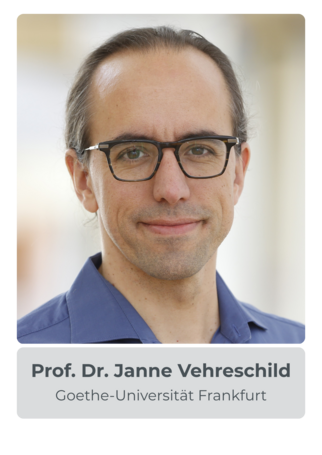
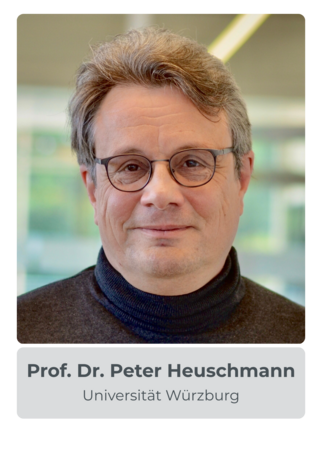
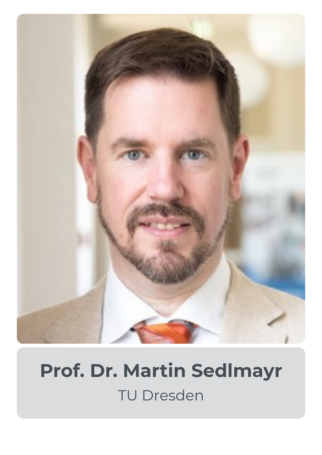
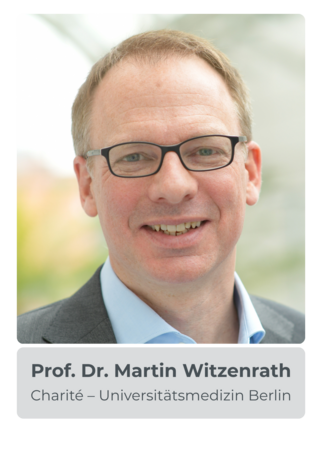
The Steering Committee is the central decision-making body of the NUM Study Network. It brings together representatives from university hospitals, research partners and stakeholder groups to steer the network’s development, ensure alignment with national research priorities and promote a sustainable infrastructure for clinical research. The committee provides strategic oversight, supports coordination between the specialist networks and ensures transparent, evidence-based decision-making.
| Who is represented? | Member | Representation |
|---|---|---|
| NUM Study Network | Janne Vehreschild | Ramsia Geisler |
| NUM Study Network | Peter Heuschmann | Gabriele Anton |
| NUM Study Network | Martin Sedlmayr | Elisa Henke |
| NUM Study Network | Martin Witzenrath | Sarah Berger |
| Clinical researchers | N.N. | N.N. |
| Patients | Martin Danner | Sandra Salm |
| Network-internal sites | Siegbert Rieg | Astrid Petersmann |
| External network sites | Andre Scherag | Katharina Feil |
| German University Medicine: MFT | Frank Wissing | Richard Blomberg |
| German University Medicine: VUD | Jens Bussmann | Sebastian Draeger |
| KKS Network | Christoph Schindler | Andrea Seidel-Glätzer |
| AK-EK | Georg Schmidt | Sonja Mathes |
| DZG | Susanne Herold | Andreas Birkenfeld |
| NUM MB Biobank Hub | Thomas Illig | Gabriele Anton |
| Specialist Network for Infectious Diseases | Corinna Pietsch | Frank Hanses |
| Specialist Network for Intensive Care Medicine | Carina Benstöm | Patrick Meybohm |
| Specialist Network for Stroke | Götz Thomalla | Karen Gertz |
| Who is represented? | Member | Representation |
| NUM Coordination Office | Ralf Heyder | Silke Wiedmann |
| NUKLEUS: Data Platform | Dagmar Krefting | Sabine Hanß |
| NUKLEUS: Adaptive Platform Studies | Maria Vehreschild | Oliver Cornely |
| NUM-MB Methods Hub | Jochen Schmitt | Peter Heuschmann |
| NUM-DIZ | Martin Dugas | Dagmar Waltemath |
The Forum is a consultative platform that brings together various stakeholder groups to jointly further develop the NUM Study Network. Its members include representatives from study locations, research institutions, professional associations, government bodies, funding organisations and other relevant institutions.
The Forum’s role is to provide guidance to the network through strategic and operational feedback, to monitor the progress of the project, and to facilitate coordination and communication between the stakeholder groups.
Although the forum has no formal decision-making authority, its deliberations are recorded in the minutes and may be taken into account in the decisions of the Steering Committee.