

About the project

With the NUM Study Network, we want to develop an effective system of cooperation in the field of clinical and clinical-epidemiological studies in Germany. We work closely with existing infrastructures, networks and researchers and would like to support this process through organisational and structural measures. Study management should be relieved of administrative and operational tasks by consistently simplifying them and transferring them to study-supporting structures. This will allow more studies to be initiated in less time, more patients to be recruited for studies in a reliable period of time and the quality of data and biosample collection to be improved.

►read more

The most important facts at a glance

Our aim is to fundamentally strengthen the German research landscape in the field of clinical and clinical-epidemiological research and to increase the overall proportion of patients who participate in studies during their treatment. This will strengthen the knowledge gained from clinical trials, promote international competitiveness and, in particular, improve medical care for patients through innovative treatment options and a better basis for decision-making.

  • Together with the specialist networks organised within it and other academic structures and organisations, the NUM Study Network helps to better represent clinical research in university medicine. Together, they work in committees, in politics and at international level to promote the opportunities of Germany as a centre of study and to make its challenges visible. They bring critical measures for successful processes into the discussion and promote their implementation in practice. They also strengthen the visibility of the study location and the topic both in specialist circles and in public perception.
  • Through technical and organisational measures, study-related processes at the study centres are to be increasingly standardised and supported by central components. The aim is to make processing times for clinical and clinical-epidemiological studies more predictable and shorter and to significantly reduce bureaucratic requirements, particularly for clinical researchers.
  • The conditions at the (initial) university medical sites are to be strengthened through targeted promotion of the local infrastructure in order to enable organisational standardisation and establish reliable screening of patients with key diseases.

Even though the NUM Study Network builds on existing work, the high complexity of the project remains a key challenge. Flexible adaptation to new circumstances requires close and careful coordination between all parties involved. Scientific validity must be ensured at all times, representative recruitment of patients must be guaranteed and regulatory and ethical requirements must be taken into account. In addition, robust systems for data management must be established, logistical hurdles overcome and contracts concluded between the parties involved. In addition, effective communication strategies need to be developed to publicise the network. All of these tasks require a high level of expertise, well thought-out strategic planning and efficient management of resources, which will be implemented by the NUM Study Network’s interdisciplinary experts.

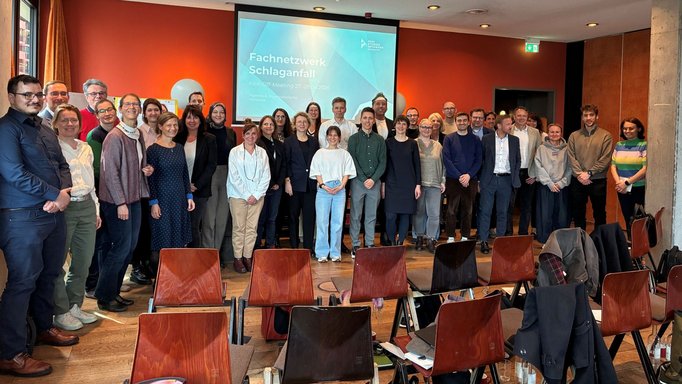
Under the leadership of a Steering Committee, the NUM Study Network creates a space for trusting collaboration, interdisciplinary expertise and cooperation with existing infrastructures. The focus is on the specialist networks that are developing within the NUM Study Network. The first Specialty Network Infectious Diseases has been successfully recruiting patients into a prospective baseline cohort since May 2025. In February 2026, two further specialist networks were launched: the Specialty Network Critical Care and the Specialty Network Stroke. The NUM Study Network is inextricably linked to its specialist networks and defines the overall strategy for all participating networks. However, the authority to make decisions on scientific issues lies with the respective specialist networks. The NUM Study Network assumes responsibility for the standardisation of communication channels, contracts, processes and criteria for the promotion of clinical trials at university sites. It offers comprehensive support across all study phases - from planning to data analysis and biosample utilisation. Automated digital collaboration, effective quality assurance and centralised operational units monitor progress in real time. Dynamic resource allocation according to performance indicators ensures the continuous achievement of project goals.

Carolin Nürnberger

People in the NUM

„Together, we are building structures that will allow us to establish studies more quickly.“
Carolin Nürnberger
to the interview

Latest news

im NUM ausspielen
eTIC+ is live - A new digital companion for study documents Read more
im NUM ausspielen
NUM study network opens up to further locations Read more
im NUM ausspielen
Together against infectious diseases: The specialist network for infections is growing Read more
im NUM ausspielen
The first six months of the SNAP study in Germany Read more
im NUM ausspielen
NUKLEUS Lighthouse app for project management in the NUM study network officially launched! Read more
im NUM ausspielen
Successful launch of the Specialty Network Infectious Diseases (SNID): Over 150 patients already included! Read more
im NUM ausspielen
Realising clinical trials faster and more effectively: NUM Infection Network launches Read more
im NUM ausspielen
Review: First General Assembly of the NUM Study Network and the Infection Network Read more

Dates