

Many patients with a coronavirus infection require intensive medical care in order to survive. Until now, it has only been possible to a limited extent to predict which disease could take such a severe course and entail a higher mortality risk on admission to hospital using the usual laboratory values and clinical examination methods. Researchers from the UKE and Aachen University Hospital have now succeeded in identifying two biomarkers that allow patients with a high, medium and low mortality risk to be distinguished with a high degree of reliability on admission to hospital. The results of the pilot study have been published in the journal Scientific Reports.
Biomarkers tested in 31 patients
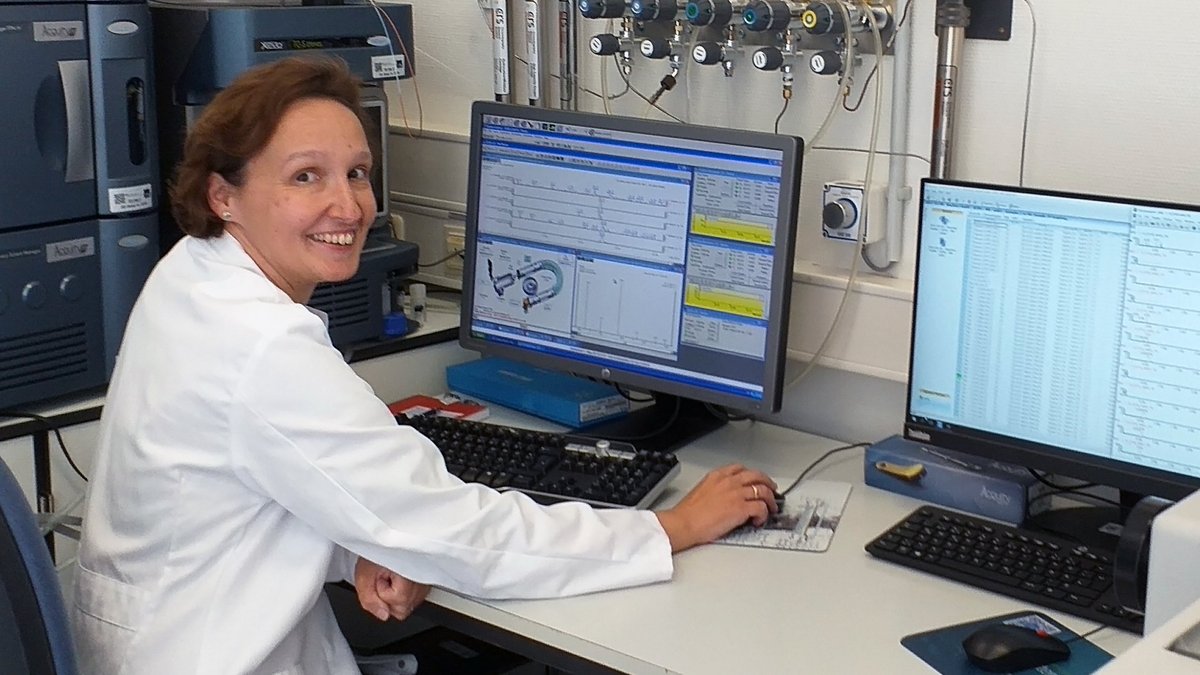
Dr Juliane Hannemann and Prof Dr Rainer Böger, both from the Institute of Clinical Pharmacology and Toxicology at the UKE, determined the serum concentrations of ADMA and SDMA in 31 patients who had to be hospitalised for treatment due to Covid-19. Asymmetric dimethylarginine and symmetric dimethylarginine are two metabolites from protein metabolism. "The results of our studies show that patients with high levels of both markers at the time of hospital admission had a mortality risk of 88 per cent, while all Covid-19 patients with low concentrations of both markers survived," says Dr Juliane Hannemann. Patients with elevated levels of only one of the two markers had an average mortality risk of 25 per cent. Institute Director Prof Böger concludes: "The results of the pilot study give reason to hope that Covid-19 patients with a high mortality risk can be identified at an early stage and treated with intensive care in order to improve their chances of survival."
Biobanking of the samples in Aachen
The blood samples analysed came from patients who were admitted to the University Hospital Aachen with Covid-19 disease between March and May 2020. "Blood samples were taken from the patients on the first day after admission, after one week, two weeks and finally after six weeks. We immediately pre-processed the samples and stored them under standardised conditions at -80 °C until analysis," reports Prof. Dr Edgar Dahl, Scientific Director of the Centralised Biomaterial Bank of RWTH Aachen University (RWTH cBMB), which was responsible for sample storage and logistics for the study.
Pioneering: earlier findings on blood poisoning
According to Prof Böger, the scientists from the UKE have already been able to show in the past that the two serum markers ADMA and SDMA enable an improved assessment of the survival prognosis in cases of dangerous blood poisoning (sepsis). The researchers, whose work is funded by the Federal Ministry of Education and Research and the Hamburg-based Joachim Herz Foundation, are now planning to conduct a large multi-centre study to confirm the results.
Source: The original version of this text was published as a press release by the University Hospital Hamburg-Eppendorf (UKE).
Scientific publication
Hannemann J, Balfanz P, Schwedhelm E, Hartmann B, Ule J, Müller-Wieland D, Dahl E, Dreher M, Marx N, Böger R. Elevated serum SDMA and ADMA at hospital admission predict in-hospital mortality of COVID-19 patients. Scientific Reports 2021; May 10 https://www.nature.com/articles/s41598-021-89180-w