


With the launch of the NUM-SAR ("Surveillance and Rapid Response") infrastructure project on 1 July 2025, a central building block was established to strengthen the NUM's crisis response capability and to cope with future pandemics. One of the modules of NUM-SAR is ESVE (evidence syntheses and trusted recommendations), which is being implemented under the joint leadership of Nicole Skoetz and Joerg Meerpohl. Prof Dr Nicole Skoetz from the University Hospital of Cologne introduces the module in more detail:
What is the aim of ESVE?
ESVE will establish a sustainable infrastructure that makes scientific evidence quickly available in crisis situations and thus supports evidence-based decisions in politics, healthcare and research. To this end, methodological and technical expertise will be networked, scalable capacities created, national and international collaborations established and innovative AI approaches tested and implemented. The developed structure will be validated using specific application examples and made usable in the long term. For example, we would like to implement a systematic review on dengue fever.
How will this goal be realised?
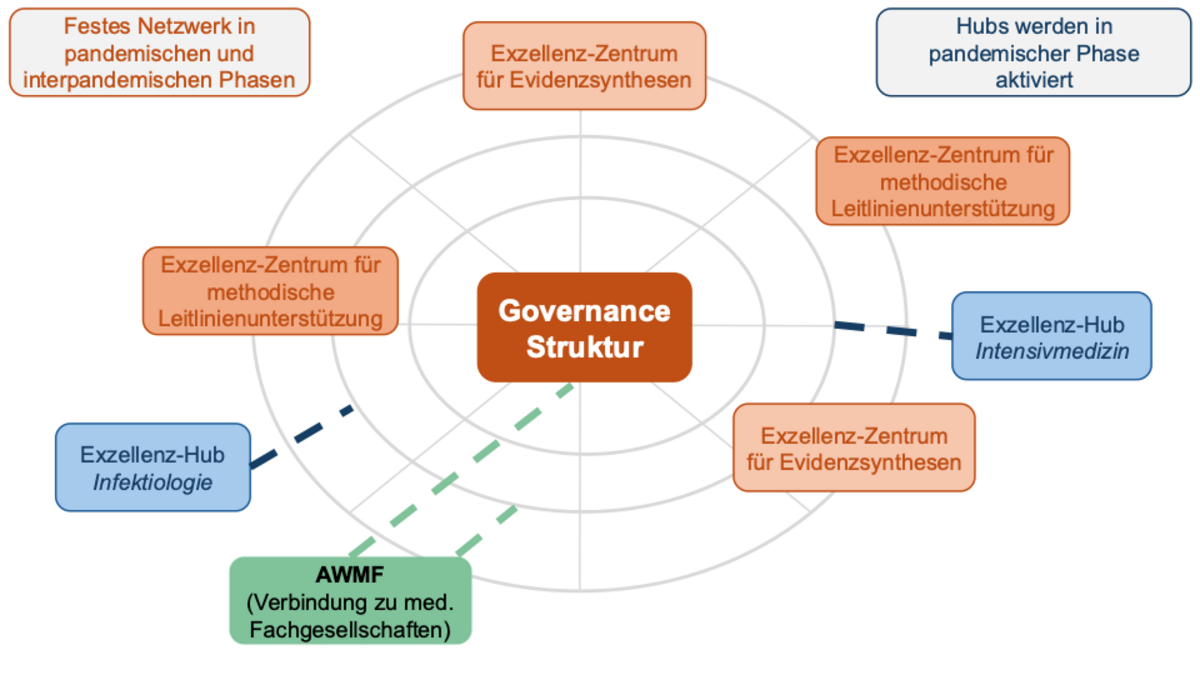
At the heart of the ESVE infrastructure is a network of eleven partner institutions in Germany that pool methodological, clinical and technical expertise in the fields of medicine and public health. With this expertise, it is then possible to quickly identify, critically evaluate and process global research results in a targeted manner - especially in the time constraints of pandemics or comparable crisis situations.
What specific tasks does the network fulfil?
The network acts as a scalable and centralised platform for evidence syntheses of various types and complexity. This includes, for example, scoping reviews, intervention reviews, prognosis reviews and network meta-analyses (NMA). The network also offers counselling, methodological development and training. This is supplemented by the provision of templates, guidelines for action, so-called SOPs, and the creation of evidence syntheses as a basis for clinical studies.
Are there also other national and international collaborations?
The network maintains close interfaces with national and international partner organisations such as Cochrane, GRADE, the WHO and the AWMF. This ensures a direct link to guideline developments in medicine and health policy decision-making processes.
How can researchers or policy makers use ESVE?
The network can be activated in various ways. In the event of a pandemic or crisis, for example, this is done through political commissions on priority issues. In addition, ESVE can be involved in consulting and research proposals for the preparation of evidence syntheses by researchers. Independently acquired research projects also contribute to the utilisation and further development of the infrastructure.
What significance does ESVE have for NUM-SAR, i.e. also for the production of pandemic preparedness and for the research landscape in general?
With ESVE, a powerful, scalable and future-oriented infrastructure for evidence syntheses is being created within the framework of NUM-SAR. At its centre is a strongly networked system of methodological and technical expertise. This network can therefore make a decisive contribution to evidence-based decision-making both in times of crisis and in regular research operations.