
Functions and interfaces of NUM-SAR
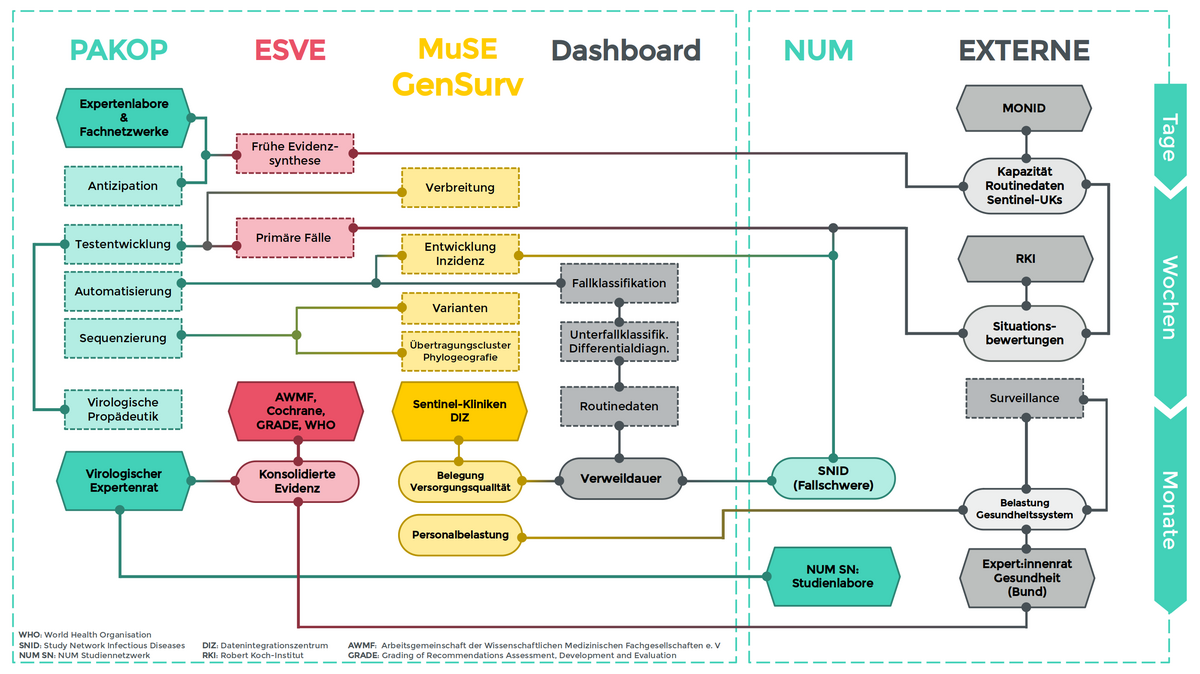
The illustration shows the functions and interfaces of NUM-SAR in a chronological sequence. The Pathogen Expertise Platform (PAKOP) strengthens the research and diagnostics of different virus groups and maintains the ability to recognise and classify new pathogens at an early stage in its laboratory network.
The Evidence Synthesis and Reliable Recommendations (ESVE) module is building a sustainable infrastructure that makes scientific evidence syntheses quickly available in crisis situations and thus supports evidence-based decisions. ESVE works closely with the NUM-SAR modules MuSE, MONID, PAKOP and other NUM infrastructures as well as international partners such as Cochrane and GRADE. The Monitoring and Surveillance Unit (MuSE) determines burdens in the healthcare system using indicator sets (e.g. on nosocomial infections and outbreaks) and identifies and validates control parameters. It also creates instruments for quality and risk management in collaboration with relevant networks and institutions. The module Genomic Pathogen Surveillance and Translational Research (GenSurv) module module comprises a data hub for data storage, analysis and visualisation of pathogen sequence data including metadata as well as the development of a strategy for integrated genomic surveillance together with the Robert Koch-Institute (RKI). The data is made available to the RKI and used in the MuSE and Dashboard modules. The Dashboard was developed to utilise data from the sites' clinical documentation systems almost in real time. The further development of the dashboard content is carried out in close cooperation between all NUM-SAR work packages with the support of additional external paediatric and child and adolescent psychiatric expertise.