


The National Autopsy Registry (NAREG)
The National Autopsy Registry (NAREG) emerged from the German COVID-19 autopsy registry (DeRegCOVID), which was founded in April 2020 to centrally collect information on autopsies of COVID-19 deaths. DeRegCOVID has contributed significantly to the understanding of COVID and its consequences and has been recommended by international experts as a model infrastructure for Europe and the world. NAREG now collects information from autopsies of various diseases and no longer "only" on COVID-19 in order to provide a sustainable, flexible, generic and inclusive infrastructure or platform for research on information obtained from autopsies.
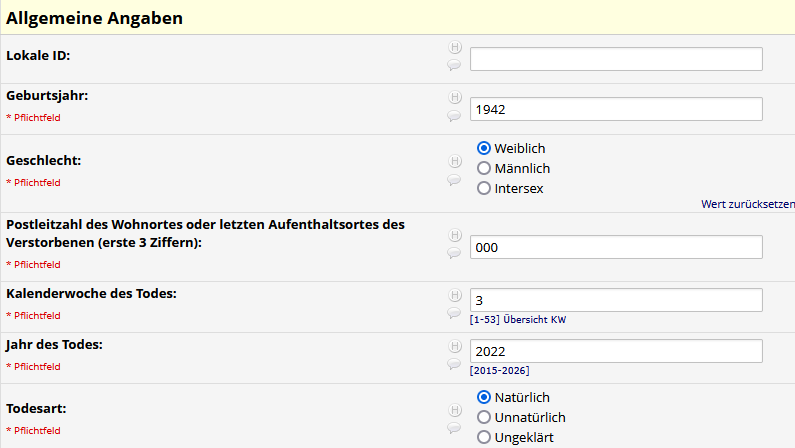
In NAREG, the basic data of an autopsy is recorded in a standardised form. The data is entered via a web browser in a central database, which is operated in the computer centre of the University Hospital RWTH Aachen under strict security precautions.
In addition to the basic data, the tissue samples taken during the individual autopsies are also recorded. These samples were required for a more precise diagnosis of the causes of death and are subject to a statutory retention period of ten years. These samples remain in the respective centres and are not collected centrally.
Only a limited number of autopsies are performed at the individual centres. This means that the doctors only have a few case examples in their own case records for certain, particularly rare, diseases. By collecting these cases centrally, the number of cases can be increased in a multi-centre approach and thus significantly more robust analyses can be carried out.
The registry also promotes collaboration between doctors from the various centresand departments (pathology, neuropathology and forensic medicine with clinical disciplines such as intensive care medicine, etc.). In this way, new findings can be fed back into clinical practice and applied to patients more quickly. The registry plays an important role as a central point of contact and as a link to transparently inform the public about these findings and successes.
The registry also fulfils other important tasks. For example, it supports the standardisation of diagnostics to ensure consistent and comparable results. Long-term data storage allows retrospective analyses to be carried out and valuable insights to be gained from previous cases. It also contributes to quality assurance by allowing results to be compared between centres and promoting best practices. The registry also serves to train and educate medical professionals and provides a platform for interdisciplinary exchange.
If an autopsy centre (this can be an Institute of Pathology at a university hospital, a non-university hospital or a private practice, but also an Institute of Forensic Medicine at a university hospital together with the neighbouring Institute of Neuropathology) has performed an autopsy and they are a centre participating in NAREG, they can subsequently enter the data on the autopsy in the register.
The registry consists of various parts that can be visualised as a questionnaire or database. The mandatory part(core data set) consists of data that is requested for every post-mortem that is entered into the register. This includes, for example, the type of death or the age of the deceased. In addition, further data can be entered on a module-specific basis that is relevant to specific diseases. These are mapped in various modules in the register. In the case of COVID-19, for example, the additional information would be virus variants or vaccinations received.
New modules can be quickly integrated into the register so that data can be recorded and analysed promptly when new diseases occur. This is useful for active pandemic preparation, for example.
The standardisation of data within the registry improves the possibilities for quality assurance and harmonisation, not only within the centres, but also nationally.
Only centres that have received a positive vote for participation in the registry from the responsible ethics committee of the respective university or the state medical association can participate in the registry. All participating centres are accredited, highly experienced and oftenhave organ-specific expertise (e.g. tissue-based pathogen detection or infection diagnostics from post-mortem tissue/blood; see also Services). Through their participation, they make a significant contribution to improving the data situation and to further scientific development. The success of the registry would not have been possible without the active participation and committed involvement of the individual centres.
Only data from autopsies that have been carried out in accordance with the legal requirements of the respective federal state may be recorded. As a rule, a post-mortem authorisation is available for this, which is most frequently granted with the consent of the next of kin.
Data from autopsies commissioned by public prosecutors (judicial autopsies) are currently not recorded in the register.
The autopsy data is entered into a central database located at the University Hospital RWTH Aachen by employees of the participating centres.
The data is recorded pseudonymously , i.e. the centres can trace the entered cases internally. For external parties, such as the registry management, their employees, the computer centre (RWTH Aachen University Hospital) and all those involved in possible research projects , the data cannot be traced back to a person. Traceability remains necessary for the respective centre so that they can reassign the samples to the registry data in the event of their own analyses or study enquiries.
The consent of relatives is not required to enter data into the register. The (health) data requested has been recorded during routine clinical anamnesis and diagnostics. The data collected in this way falls under the Health Data Utilisation Act (GDNG) and may be further processed within healthcare facilities. The balance to be struck between individual rights and the common good (improving research into diseases) is in favour of the common good. There is no right to object to this.
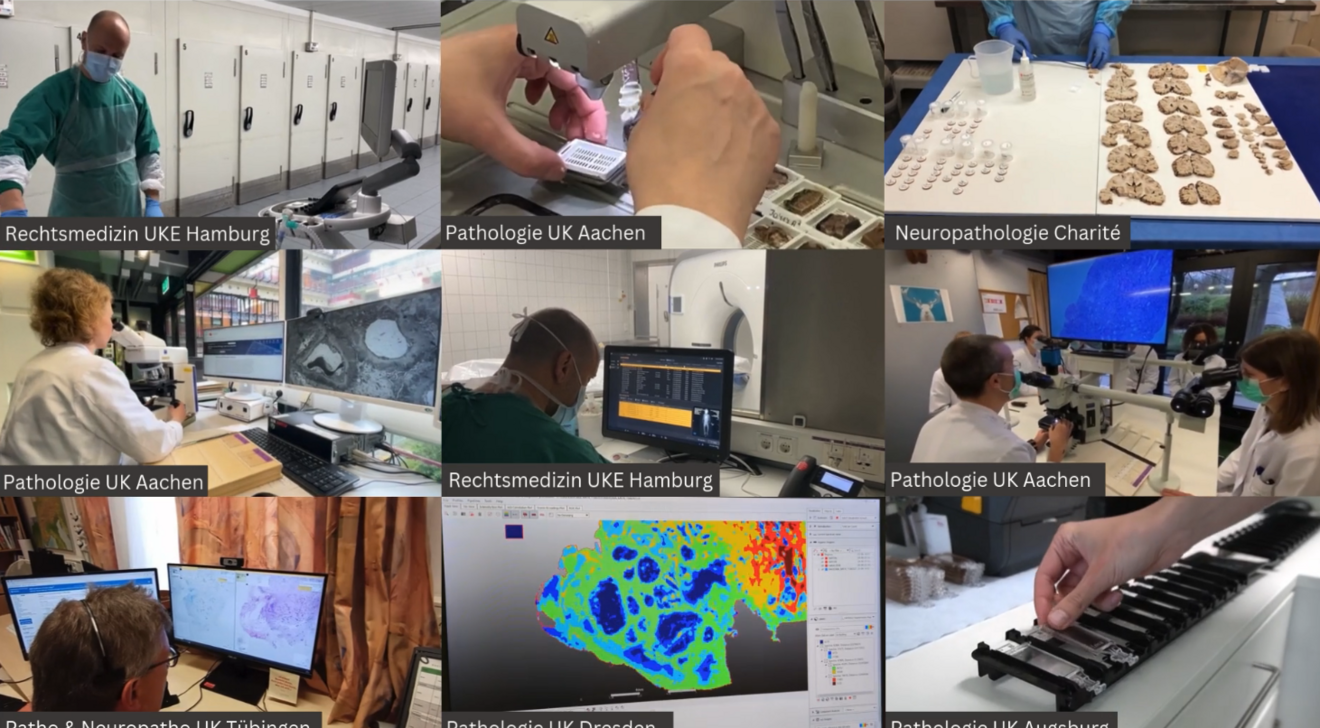
The autopsy - both clinical and forensic - offers considerable benefits for the treating physicians. In a clinical autopsy, the precise examination of organs and tissue enables a review of the diagnoses and therapies applied and can thus provide further evidence of a possible metabolic disease, an infection, a genetic disease or a malignant tumour of the deceased in retrospect. This makes it possible to trace the course of the disease in detail. Diagnoses that were confirmed before death can be confirmed and often supplemented by additional findings and sometimes put into a new context. The effects of therapeutic strategies can be assessed and discussed. In many cases, the comprehensive post-mortem examination of the course of disease of the autopsied patient is analysed and discussed at interdisciplinary conferences by the various specialist disciplines involved in the treatment. This not only contributes to quality assurance in clinical medicine, but also to the continuous improvement of medical treatments and the understanding of rare or complex clinical pictures.
Forensic post-mortems, which are carried out in cases of unclear or non-natural deaths, can also provide valuable information. It helps to better understand medical complications or unexpected courses of events and promotes the clarification of potential treatment errors. In both cases, the findings of the post-mortem contribute to expanding medical knowledge, strengthening legal certainty, objectifying patients' rights and improving clinical practice.
The National Autopsy Network is continuously committed to improving autopsies, transferring knowledge to clinicians and specialised staff and increasing public awareness. This includes the optimisation and standardisation of autopsy findings, their integration into the registry and the development of new areas of application in close collaboration with scientists. The register can be expanded to include additional modules if there is a corresponding research interest. This work is regularly presented at conferences and congresses to give interested parties an insight into post-mortem research. In addition, more emphasis is placed on public relations work in order to provide the general public with a comprehensive insight into the subject. This is done, for example, through the targeted publication of comprehensible reports (e.g. on social media), the provision of press releases and information material and close cooperation with the press and various media.
The results of the studies obtained with data from NAREG are published in scientific publications. Previous publications are listed here and can also be found via search engines for medical and scientific publications, such as PubMed.
Sometimes journalists pick up on the results of these studies and report on them in articles, programmes or podcasts. Press releases from the media about NAREG are listed here.