

Researchers from the Faculty of Medicine at the University of Freiburg have discovered an important building block in the development of common autoimmune diseases and chronic inflammation. To do so, they examined patients who did not suffer from one of these more common diseases, but rather those who had extremely rare genetic immunodeficiencies. The analysis of biosamples from these 200 or so patients showed that certain genetic changes prevent the development of specific overactive immune cells. The discovery of these central mechanisms provides new insights into the development of immune cells that attack the body. Therapies that have already been approved act on this previously unexplained molecular switch in the so-called B cells of the immune system. "Our findings can potentially help to develop more specific therapies for autoimmune diseases and to use existing therapies in a more targeted manner," says Dr Bärbel Keller, first author of the study at the Centre for Chronic Immunodeficiency at the University Hospital Freiburg. The study was published in the renowned journal Science Immunology.
Several starting points for improved therapy
In chronic inflammatory autoimmune diseases such as rheumatoid arthritis or lupus erythematosus, a subtype of activated B cells often accumulates in the blood of patients that rarely occurs in healthy people. The Freiburg researchers have now shown that these overactive B cells of an excessive immune response do not accumulate in people with specific genetic defects of the immune system. Laboratory tests confirmed the importance of these molecular building blocks for the immune response. "With this new knowledge, it is now possible to search for inhibitors of these signalling pathways in a more targeted manner and thus slow down excessive immune reactions," says Prof. Dr. Klaus Warnatz, project leader at the Centre for Chronic Immunodeficiency and the Department of Rheumatology and Clinical Immunology at the University Hospital Freiburg.
The researchers were also able to demonstrate that one of the central signalling pathways involves the messenger substance gamma interferon. Drugs known as JAK inhibitors, which are used to treat rheumatoid arthritis, for example, already interfere with its activity. "The increase in activated B cells in the blood of patients with autoimmune diseases may help in diagnostics to recognise patients who particularly benefit from JAK inhibitor therapy. Clinical studies need to confirm this," says Keller.
Critical genetic defects extremely rare worldwide
The diseases of the patients studied are so rare that in some cases only two or three affected individuals are known worldwide. This is why the search for genetic changes was only possible in collaboration with a large number of international collaboration partners: "These rare patients with defined immune system disorders help us to understand fundamental mechanisms of the human immune system and thus develop new therapeutic approaches," says Warnatz.
Special treasures: Biobanking of samples from rare diseases
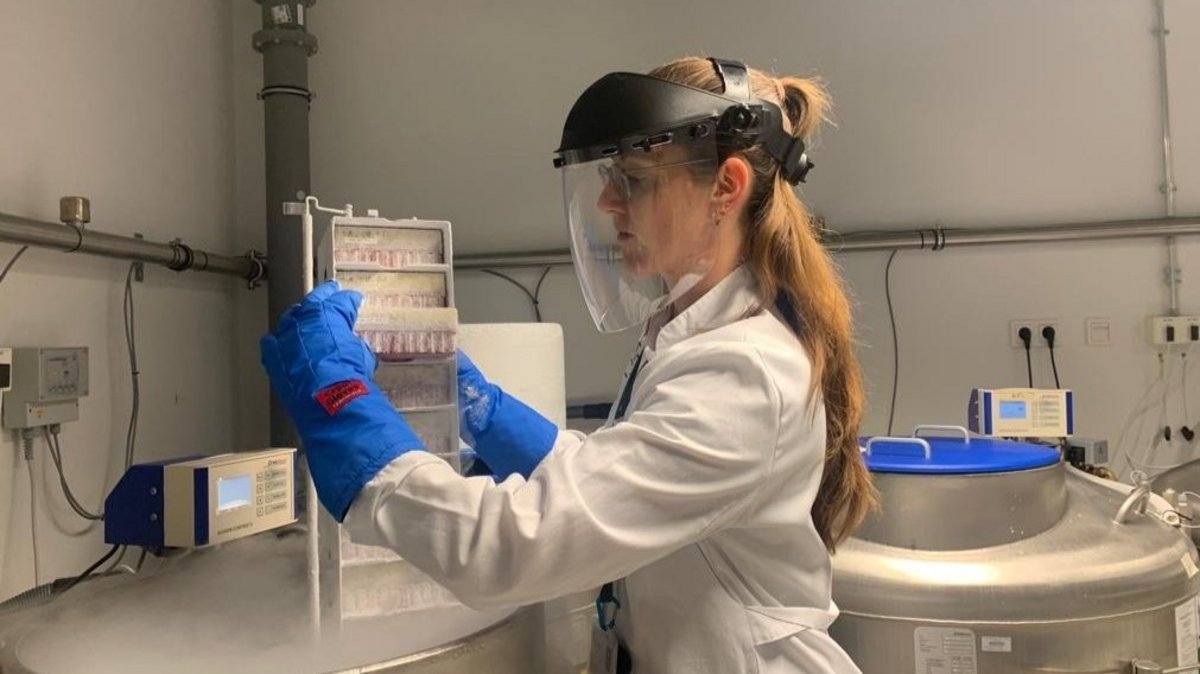
For meaningful research results, the scientists needed suitable biosamples such as blood and tissue. To this end, they worked closely with the FREEZE Biobank Freiburg, a partner biobank of the German Biobank Alliance (GBA) since 2019, where biosamples are collected, processed and stored in a standardised manner. The FREEZE Biobank was also responsible for the isolation of peripheral blood mononuclear cells - PBMCs for short - from some of the samples examined, which were provided for the immunological analyses. "The results of this study are a great success and we are pleased to have made an important contribution to this as a biobank with our partners at the Centre for Chronic Immunodeficiency and the Clinic for Rheumatology and Clinical Immunology," says Prof. Dr Alexandra Nieters, Head of the FREEZE Biobank. "Many thanks go to the sample donors, whose very special samples have helped us to better understand the mechanisms of much more common autoimmune diseases."
Source: An original version of this text was published as a press release by the University Hospital Freiburg.
Image credit: FREEZE-Biobank
Scientific publication
Baerbel Keller et al. The expansion of human T-bethighCD21low B cells is T cell dependent. Science Immunology 2021; Vol 6, Issue 64. DOI: 10.1126/sciimmunol.abh0891