

The COVID-19 pandemic has clearly demonstrated the importance of robust data structures and rapid responsiveness – whilst also revealing that greater consideration must be given to the specific needs of children and young people. This is precisely where the NUM Platform for Surveillance and Rapid Response (NUM-SAR) comes in: It combines comprehensive pathogen diagnostics and surveillance with data on the actual burden on the healthcare system and the dynamics of pandemics – ranging from pathogen variants and immunisation to changes in the use of psychiatric services and the impact on care provision. The NUM Dashboard, as a federated analytics infrastructure, represents one of a total of five work packages within NUM-SAR. In accordance with the highest data protection standards and following a ‘privacy-by-design’ approach, it makes aggregated health and care data available across Germany in near real time and serves as an information and management tool for clinical professionals, policy-makers and the general public alike.
A new addition to the NUM Dashboard in 2026 is the ‘KinderRadar’ (KiRa) section, which highlights paediatric as well as child and adolescent psychiatric perspectives.
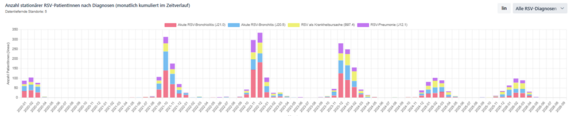
The paediatric component enables a cross-site analysis of disease progression, infection dynamics – for example, in the case of respiratory syncytial virus (RSV) – and the effects of immunisation. It thus provides an evidence-based foundation for decisions specifically tailored to the needs of children.
Pandemic prevention does not begin only in the event of a crisis: even during the non-pandemic phase, structures for diagnostics, surveillance and data utilisation are established and tested so that we are able to act swiftly in an emergency. In the early stages of a pandemic, it is crucial to establish diagnostic procedures swiftly, systematically collect initial clinical data, and closely monitor disease progression and its impact on healthcare capacity – particularly in the paediatric sector.
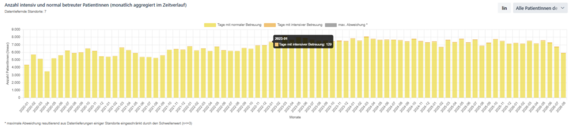
Another focus of the KiRa Dashboard is on child and adolescent psychiatric care (KJP), for which only limited, cross-sectoral care data has been available to date. The CMP-specific analyses capture key aspects of inpatient care, such as diagnoses, treatment episodes, length of stay, intensive care and readmissions, thereby enabling a nuanced examination of care pathways and their development over time. The standardised processing of the data enables a cross-site analysis and provides a basis for identifying changes, specific features or trends in child and adolescent psychiatric care. The NUM Dashboard thus not only provides an insight into the current state of care but also creates a relevant data foundation for care analysis and the formulation of further research questions.
NUM-SAR thus opens up new possibilities for multi-centre analyses based on aggregated data from the connected Data Integration Centres (DIZ) of the clinics linked to the NUM Dashboard. These provide valuable insights, for example into the prediction of risk for severe and complicated disease progression – both at population level for the early detection of pandemic developments and with direct relevance for the individual child in day-to-day clinical practice. At the same time, retrospective analyses of past pandemics and disease courses enable us to learn from existing data and better manage future healthcare requirements.
The KiRa Dashboard thus goes beyond the mere systematic recording of disease trends: It offers the potential to map further dynamic aspects of care, as well as paediatric and child and adolescent psychiatric conditions, thereby fostering an even more comprehensive understanding of children’s health.
With regard to the objective of ‘pandemic and crisis preparedness’, the KiRa Dashboard makes an essential contribution to NUM-SAR, as it explicitly takes children and young people into account in the event of a pandemic or crisis.
Through the integration of KiRa, NUM-SAR as a whole makes a decisive contribution to strengthening pandemic and crisis prevention, usefully supplementing existing structures, and sustainably improving data-driven, forward-looking and child-centred care.