



Alongside the ongoing development of the registry infrastructure, one of NUM4Rare’s key priorities in the second quarter of 2026 was to establish links with national and European initiatives. The aim is to create synergies at an early stage, draw on experience from other initiatives and lay the foundations for long-term collaboration. To this end, NUM4Rare was represented, amongst other events, at the TMF Registry Days 2026, Medical Informatics Europe (MIE) 2026 in Genoa, and the Annual Topical Workshop on National Registries organised by the European Rare Disease Research Alliance (ERDERA) in Riga.
At the TMF Registry Days 2026, the focus was on the question: “Harmonisation of data collection – is harmonisation worthwhile, and for whom?” On behalf of NUM4Rare, an overview of existing minimum data sets for rare diseases was presented. Among other things, the presentation outlined how NUM4Rare aims to help provide guidance through the multitude of existing core data sets and to better understand how they interact.
The European perspective also played a central role at Medical Informatics Europe (MIE) 2026, held in Genoa at the end of May. In the workshop ‘Preparing for EHDS – Tasks and Challenges for Medical Registries’, current challenges facing medical registries were discussed. NUM4Rare contributed the perspective of rare disease registries and presented the project’s approach within the context of the Network University Medicine (NUM). The exchange provided valuable insights into common registry-related challenges across national borders, particularly with regard to the future European Health Data Space (EHDS).
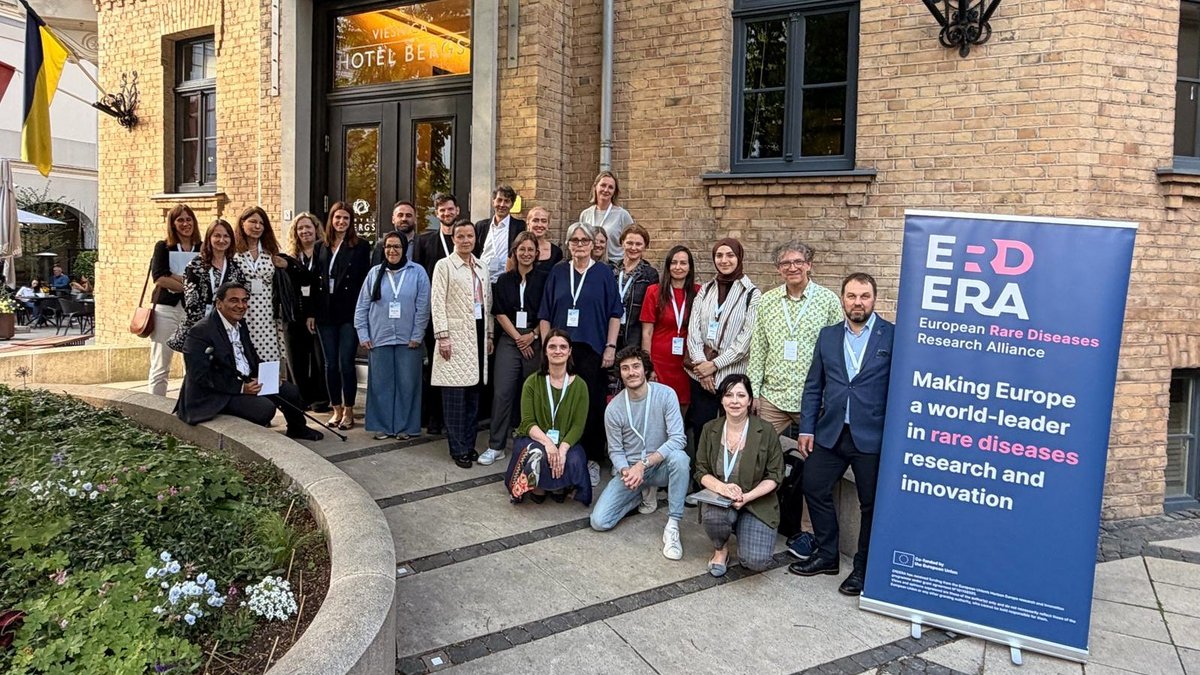
At the ERDERA Annual Topical Workshop on National Registries in Riga, key obstacles and challenges in establishing national registries for rare diseases in Europe were discussed over two days; best-practice examples were presented and possible solutions were developed collaboratively.
Through this ongoing exchange, NUM4Rare is closely linked to current national and European developments. This enables experiences and solutions to be taken on board at an early stage, duplication of structures to be avoided, and the further development of the registry infrastructure for rare diseases across national borders to be organised in the most synergistic way possible.