

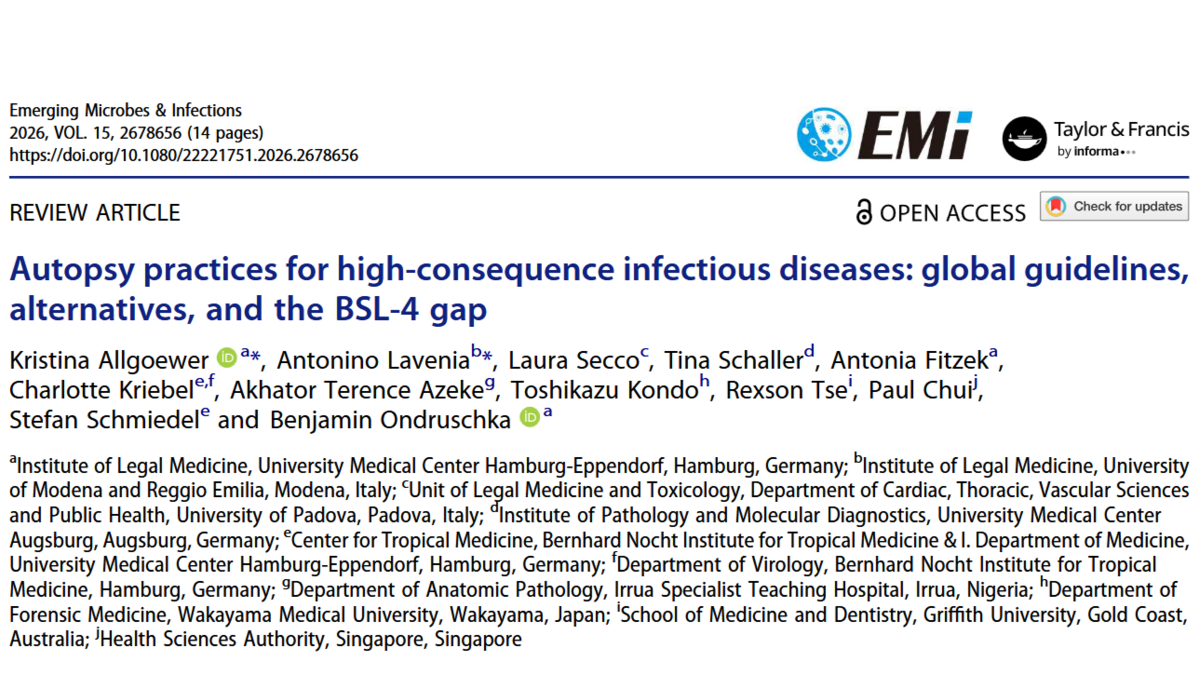
How can autopsies be carried out safely in cases of high consequence infectious diseases (HCID) such as Ebola, Marburg or Lassa fever? That is the central question of an international Review article recently published in Emerging Microbes & Infections with participation from scientists from the National Autopsy Network.
The authors demonstrate that autopsies can make a crucial contribution to our understanding of both new and known infectious diseases. Particularly for diseases caused by pathogens in the highest risk group (RG4), a better understanding of pathophysiology is essential for the development of specific therapeutics and vaccines that are currently lacking. Yet this is precisely where a significant gap exists worldwide: While detailed recommendations exist for autopsies conducted under Biosafety Level 3 conditions, guidelines for autopsies under BSL-4 conditions are lacking. The publication compares existing international guidelines, discusses alternative procedures such as minimally invasive tissue sampling, and, for the first time, develops a structured proposal for conducting BSL-4 autopsies.
The Review highlights the importance of internationally harmonised standards and efficient autopsy infrastructures as part of pandemic preparedness. We are delighted to have contributed to this important publication.
Here you can access the full article by Allgoewer et al.